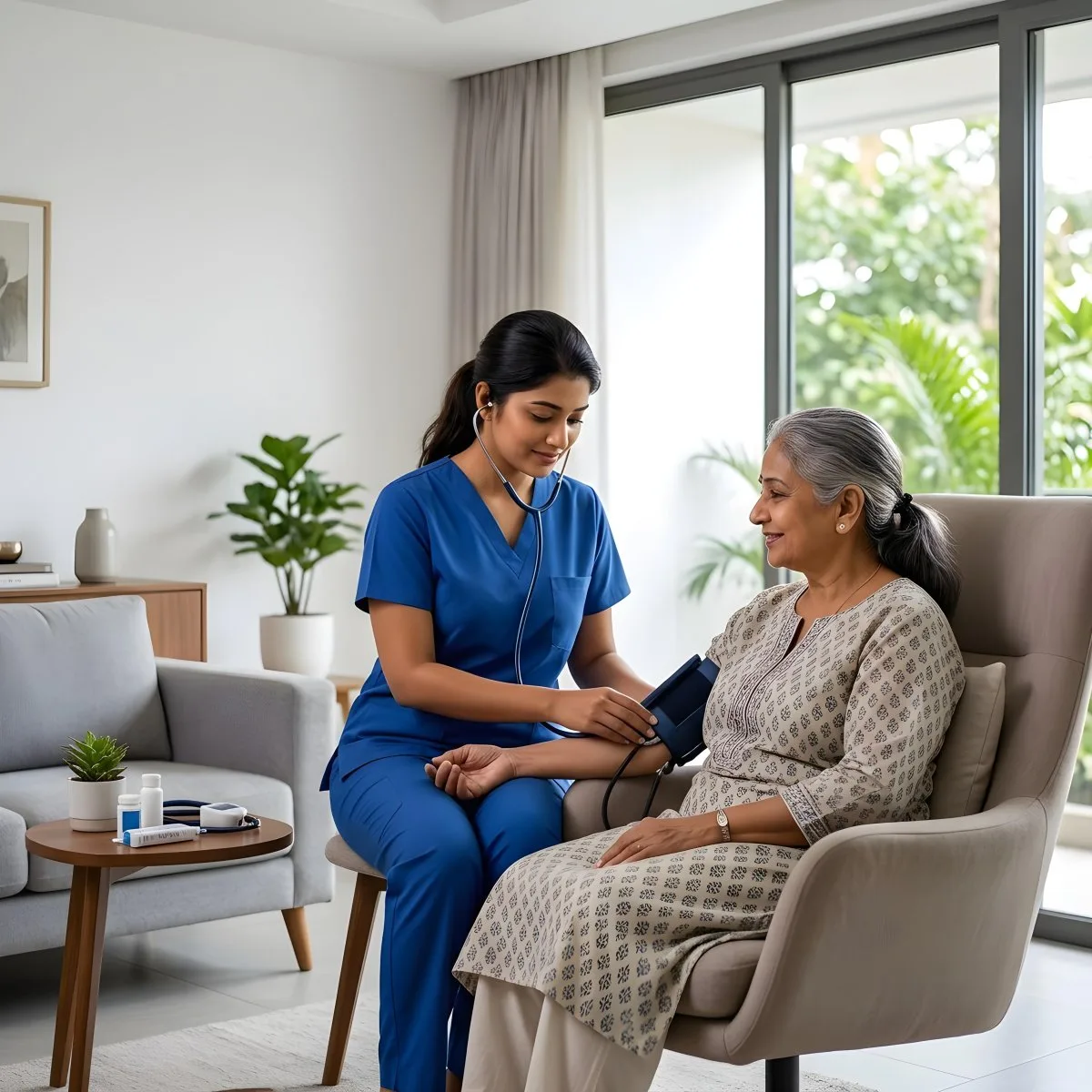
- 15+ years combined home healthcare experience
- Background-verified clinical staff
Medca Healthcare provides palliative care support at home in Bangalore focused on comfort, dignity, and quality of life for patients with serious life-limiting illness. Caregivers deliver gentle personal care, positioning, symptom observation, emotional presence, and family respite under nursing supervision.
Medical overview
Medca Healthcare provides compassionate palliative care support at home in Bangalore for patients living with serious, life-limiting illnesses where the primary goal shifts from cure to comfort, dignity, and quality of life. Our caregivers deliver gentle personal care, symptom observation, emotional presence, and family respite during the most demanding phases of advanced disease.
Palliative care differs fundamentally from curative rehabilitation — the focus is on relieving suffering, maintaining human connection, and honouring patient preferences in familiar surroundings. Medca attendants work alongside hospice physicians, palliative nurses, and grieving families to ensure the patient is clean, comfortable, positioned well, and never left alone during critical periods.
Palliative support is available through caregiver services. Clinical pain management, IV medications, and advanced symptom control may require adding home nursing or coordinating with the treating palliative medicine team.
Symptoms & warning signs
- Persistent pain, breathlessness, or nausea in advanced illness
- Profound weakness limiting all self-care and mobility
- Loss of appetite, difficulty swallowing, or reduced oral intake
- Anxiety, fear, or spiritual distress about illness progression
- Skin breakdown from prolonged bed rest in terminal phase
- Family caregiver exhaustion from continuous bedside vigil
Common causes
- Advanced cancer with metastatic spread beyond curative treatment
- End-stage heart failure, COPD, or chronic kidney disease
- Progressive neurological conditions — ALS, advanced Parkinson's, MS
- Failure to thrive in elderly frailty with multi-organ decline
- Transition from active oncology treatment to comfort-only care
Risk factors
- Inadequate home support leading to uncontrolled symptoms and emergency visits
- Family caregiver burnout causing care gaps and patient distress
- Absence of advance care planning and unclear treatment goals
- Social isolation intensifying psychological suffering
- Poor symptom communication between family and medical team
Who needs this service
- Patients with life-limiting illness where comfort is the primary care goal
- Families needing professional bedside presence during terminal phase
- Individuals discharged from hospital for end-of-life care at home
- Patients enrolled in or transitioning toward hospice-oriented care
- Stable patients whose clinical needs are comfort-focused rather than curative
When higher-level clinical care is required
- Patients requiring IV opioid titration, syringe driver management, or continuous oxygen titration need registered palliative nurses, not caregiver-only support.
- Active sepsis, acute respiratory failure, or unstable cardiac arrhythmia may require hospital or ICU-at-home management first.
- Patients whose families expect curative treatment escalation may need goals-of-care discussion before palliative caregiver placement.
Why choose Medca Healthcare
Key benefits
- Comfort-Focused Care
- 24/7 Presence Available
- Dignified Personal Care
- Bangalore Home Service
- Family Respite Support
- Symptom Reporting
Clinical care process
- 1 Sensitive intake with family covering diagnosis, prognosis, and care goals.
- 2 Home assessment for bed setup, oxygen needs, and family support structure.
- 3 Care plan aligned with treating physician and any hospice team involvement.
- 4 Assignment of emotionally mature caregiver experienced in palliative settings.
- 5 Daily symptom documentation shared with family and clinical contacts.
- 6 Compassionate transition support if hospital or inpatient hospice becomes necessary.
Treatment support & care scope
Clinical & daily care support
- Gentle repositioning and pressure relief for comfort in bed-bound patients
- Mouth care, lip moisturization, and eye care for unconscious or semi-conscious patients
- Sponge bathing and continence care preserving dignity and skin integrity
- Quiet companionship and presence during anxiety or spiritual distress
- Symptom logging — pain scores, breathing pattern, consciousness level
- Family communication and emotional support during difficult moments
- Coordination with visiting nurses for medication administration
Related conditions
- Advanced cancer palliation at home
- End-stage cardiac and respiratory failure comfort care
- Neurological terminal illness — ALS, advanced Parkinson's
- Elderly failure-to-thrive with comfort-oriented goals
- Post-hospice-discharge home support in final weeks
- Cross-cultural and religious sensitivity in end-of-life rituals
- Advanced Cancer
- End-Stage Heart Failure
- Terminal COPD
- ALS
- Hospice Care
Recovery guidance & expected outcomes
- Reading, prayer, or music according to patient and family preferences
- Gentle hand massage and comfort touch when culturally appropriate
- Maintaining a calm, softly lit environment reducing overstimulation
- Facilitating final family visits and meaningful conversations
- Assisting with cultural or religious end-of-life observances at home
Care team & availability
- 24/7 live-in care for patients in active dying phase needing constant presence
- 12-hour shifts providing family respite during demanding care periods
- Night shifts allowing exhausted family members to sleep with confidence
- Flexible short-term engagement during crisis symptom periods
Emergency signs — seek immediate help
- Sudden severe uncontrolled pain despite prescribed analgesics
- Acute respiratory distress with cyanosis or gasping breathing
- Uncontrolled bleeding from tumour site or mucosal surfaces
- Seizure activity in brain metastasis patients
- Signs of bowel obstruction — vomiting, abdominal distension, no flatus
- Family request for urgent physician or hospice nurse visit
Caregiver & family guidance
Speak softly and assume the patient can hear even when unresponsive. Follow the family's cultural and spiritual preferences for end-of-life care. Never discuss prognosis loudly in the patient's presence unless the family directs otherwise. Report any change in breathing pattern, consciousness, or pain level immediately.
Medical highlights
Medca Healthcare palliative home support in Bangalore offers comfort-focused caregiver assistance for advanced cancer, organ failure, and terminal illness. Services include dignified hygiene, repositioning, symptom reporting, family respite, and emotional presence alongside clinical nursing when required.
- Comfort-first approach prioritizing dignity over curative intervention.
- Gentle personal care, repositioning, and mouth care for seriously ill patients.
- Symptom observation with rapid reporting of pain or respiratory distress.
- Family respite allowing loved ones to rest without leaving the patient alone.
- Seamless coordination with palliative physicians and home nurses when needed.
Sub-services
-
Comfort Care Support
Medca Healthcare delivers premium Comfort Care Support solutions, combining clinical expertise with personalized patient care in the comfort...
-
Daily Living Support
Medca Healthcare delivers premium Daily Living Support solutions, combining clinical expertise with personalized patient care in the comfort...
-
Emotional Support
Medca Healthcare delivers premium Emotional Support solutions, combining clinical expertise with personalized patient care in the comfort of...
-
Family Support Assistance
Medca Healthcare delivers premium Family Support Assistance solutions, combining clinical expertise with personalized patient care in the co...
Frequently asked questions
- What is the difference between palliative care and standard caregiving?
- Standard caregiving focuses on daily living and recovery. Palliative care prioritizes comfort, symptom relief, and dignity when cure is no longer the goal.
- Can Medca provide nurses for pain management at end of life?
- Yes. We coordinate registered nurses for clinical pain management alongside comfort-focused caregivers.
- Is palliative care the same as hospice?
- Related but not identical. Hospice typically serves patients with prognosis under six months. Palliative care can begin earlier alongside curative treatment.
- Do caregivers stay during the final hours?
- Yes. We provide continuous 24/7 presence when families request bedside support through the dying process.
- How do you support grieving families?
- Caregivers offer practical respite and emotional steadiness. Medca supervisors can connect families with bereavement resources when appropriate.
- Can palliative patients receive care at home instead of a hospice facility?
- Many families choose home end-of-life care. Medca supports this when symptoms can be managed safely in the home environment.
- What symptoms can caregivers manage without a nurse?
- Positioning, mouth care, hygiene, emotional presence, and observation. Medication administration and clinical interventions require nursing.
- How quickly can palliative support begin?
- Medca prioritizes urgent palliative requests and often deploys caregivers within 24 hours for end-of-life situations in Bangalore.
Medical information & trust
- Content author
- Medca Healthcare Clinical Content Team
- Medical reviewer
- Medca Healthcare
- Last reviewed
- August 7, 2026
- Last updated
- September 1, 2026
- Contact
- +91 8884 999 001 · SLN Complex, 2nd Floor, Arekere Gate, Bannerghatta Road, Bengaluru, Karnataka 560076
This page provides general medical information about home healthcare services and is not a substitute for emergency care or a direct medical consultation. Call emergency services (108/112) for life-threatening symptoms.